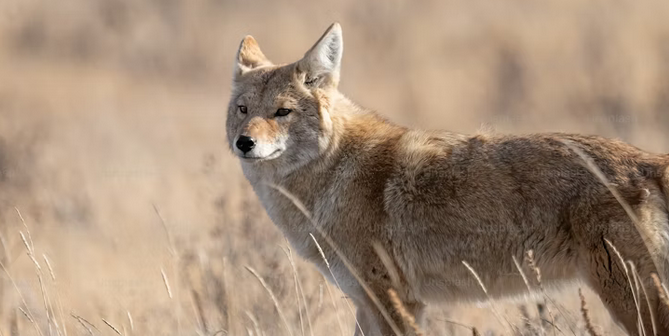
RHODE ISLAND - If you live in Warwick, Cranston, or anywhere on Aquidneck Island and have noticed a larger, more confident predator patrolling your neighborhood this week, you aren't alone. The Rhode Island Department of Environmental Management (DEM) and local animal control officers are issuing warnings about a "brazen" spike in wildlife activity that is catching residents off guard: The Eastern Coyote.
 While coyotes are found in every community in Rhode Island (except Block Island), their behavior is shifting right now. Reports are flooding in from Middletown, Johnston, and South Kingstown of these predators appearing in broad daylight, refusing to back down from dog walkers, and even loitering in driveways.
Here is why this is happening now and what every Rhode Island homeowner needs to know to keep their family safe.
The "Brazen" Behavior: Why Now?
The sudden boldness isn't random—it is biological. January through March is coyote mating season.
During these winter months, coyotes are more active, highly territorial, and significantly less afraid of humans than usual.
- Male Aggression: Male coyotes are currently driven by hormones. They view large dogs not as prey, but as competition for a mate. They may approach leashed dogs to "escort" them out of their territory.
- Daylight Hunting: While typically nocturnal, the need to find a mate and increased caloric needs push them to hunt during the day. Dawn and dusk are currently "peak danger" times for pet owners.
The "Coywolf" Factor
The "Eastern Coyote" found in the Ocean State is genetically distinct from the smaller western coyote. Often referred to as a "Coywolf," it carries wolf DNA, making it larger (up to 50 lbs), smarter, and incredibly adaptable to suburban life.
They are no longer just "rural" animals. They are thriving in the patches of woods behind housing developments in Cumberland, East Providence, and especially on Aquidneck Island, where the population density forces them into closer contact with humans.
2026 RI DEM Reminders
The RI DEM has long emphasized that "a fed coyote is a dead coyote." In Rhode Island, it is illegal to negligently feed wildlife, and during mating season, leaving food out essentially invites predators to claim your yard as their denning territory.
3 Steps to Protect Your Home
If you spot a coyote in your yard, do not just watch it. You must re-instill their fear of humans.
- The "Haze" Method: If a coyote is staring at you, be loud. Wave your arms, yell, use an air horn, or spray a hose. If you run inside, you teach the coyote that it owns the yard.
- The "Leash" Rule: Keep dogs on leashes, even in your own yard if it isn't physically fenced. An invisible fence is not a barrier to a coyote. They can and will cross it to get to a small dog.
- Secure the Perimeter: Remove all attractants. Bird feeders (which attract squirrels, a coyote snack), unsecured trash cans, and outdoor pet food bowls are the #1 reason coyotes enter residential neighborhoods.