SOUTH CAROLINA - If you drive in South Carolina, you know the drill: You are cruising at 70 mph, and then suddenly—for no apparent reason—you are at a dead stop.
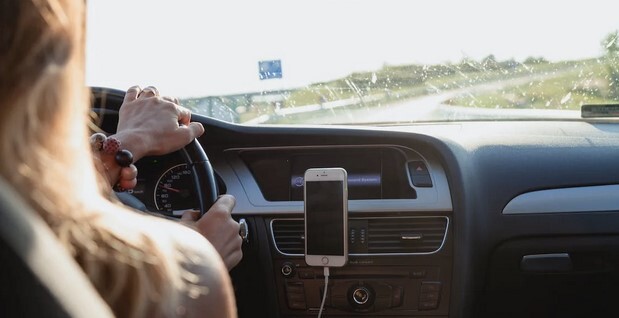 While tourists complain about traffic on Hilton Head, locals know the real danger is Interstate 26. It has been repeatedly ranked among the deadliest highways in America. It connects the mountains to the sea, but the stretch between Columbia and Charleston is notorious for high-speed "accordion" crashes and trees that sit dangerously close to the road.
But the danger isn't limited to the interstate. From the chaotic construction zones of the Midlands to the pedestrian hazards of Myrtle Beach, here are the red zones you need to watch out for in 2026.
1. The "Widowmaker": I-26 (The "Lowcountry Gap")
Locals call it many names, but the result is the same. The stretch of I-26 running east toward Charleston is a statistical nightmare.
The Danger Zone:
- The "Tree Trench": Unlike many modern interstates with wide grassy medians, large sections of I-26 are lined with dense pine trees right off the shoulder. If a car leaves the road here, there is no room to correct.
- The "phantom" Traffic Jams: Because it is only two lanes for long stretches, a single fender bender can instantly back up traffic for miles. Drivers doing 75 mph often slam into the back of stopped traffic around blind curves.
- The Stat: It frequently claims the title of the State highest fatality rate per mile.
2. The Legend: "Malfunction Junction" (Columbia)
If you live in the Midlands, you probably just groaned reading that name. The convergence of I-26, I-20, and I-126 is the state's most infamous bottleneck.
- The Problem: It forces drivers to cross multiple lanes of traffic in a very short distance to catch their exits.
- The Current Risk (2026): It is currently in the middle of the massive "Carolina Crossroads" construction project. The lanes shift frequently, concrete barriers are tight, and confused drivers often make erratic moves.
- The Advice: If you can take a surface street (like Broad River Rd) to bypass it during rush hour, do it.
3. The Intersection List: 2 Spots to Watch
Beyond the interstates, these specific corridors are fender-bender factories.
A. Woodruff Road (Greenville)
While not always high-speed "deadly," Woodruff Road is legendary for being the most frustrating and crash-prone commercial strip in the Upstate.
-
The Risk: It is the "Stroad" capital of SC. With hundreds of driveways, shopping centers, and confused drivers looking for I-85 and I-385, rear-end collisions are a daily reality.
B. US-17 "Kings Highway" (Myrtle Beach)
In the Grand Strand, Kings Highway is a different kind of danger.
- The Danger: It’s a mix of tourists who don't know where they are going, locals trying to get to work, and thousands of pedestrians crossing at night.
- The Stat: This corridor consistently ranks high for pedestrian fatalities. If you are driving here at night during Bike Week or Spring Break, assume someone will step into the road.
4. The Rural Threat: The "Dead Man's Curves" of SC
South Carolina has the highest rate of rural road fatalities in the country. It isn't just one road; it's a category.
- The Profile: Narrow, two-lane blacktop roads with deep ditches and no shoulders (common in Aiken, Orangeburg, and Colleton counties).
- The Risk: Running off the road. In SC, if your tire drops off the pavement on a rural road, the deep ditch will flip your car. Locals know: Don't jerk the wheel back.
Summary: How to Survive the Commute
- Watch the Brake Lights on I-26: If you see brake lights half a mile ahead, slow down now. Do not wait until you are close. The traffic stops harder here than anywhere else.
- Lane Discipline in Columbia: In Malfunction Junction, pick your lane two miles early. The "last-second swoop" is how accidents happen.
- Stay Centered on Rural Roads: On back roads at night, stay near the center line (when safe). The shoulders are soft, and the ditches are unforgiving.