
PENNSYLVANIA - An alarming new forecast has sent shockwaves through Pennsylvania’s healthcare community: as many as a dozen more hospitals across the Commonwealth could be forced to close their doors within the next four years.
For residents outside of major hubs like Philadelphia and Pittsburgh, this isn't just economic news—it’s a potential matter of life and death. The warning signals a deepening crisis that could leave hundreds of thousands of Pennsylvanians without quick access to an emergency room, labor and delivery services, or critical care.
Here is a breakdown of why PA hospitals are on the brink and which communities are most vulnerable.
The Perfect Financial Storm
Why are so many Pennsylvania hospitals facing collapse? Experts say it isn't mismanagement, but rather a "perfect storm" of systemic financial pressures that have become unsustainable for smaller facilities.
While large hospital networks have the capital to weather economic downturns, independent community hospitals and rural health systems are running out of cash. The primary drivers of this crisis include:
- Crippling Staffing Costs: Following the pandemic, a severe nursing shortage forced hospitals to rely on expensive travel nurses and agency staff, draining reserves.
- Inflation vs. Reimbursement: The cost of medical supplies, drugs, and utilities has skyrocketed due to inflation. However, reimbursement rates from Medicare and Medicaid—which many rural hospitals rely on disproportionately—have not kept pace with these rising costs. Every patient treated often represents a financial loss.
- The End of Pandemic Aid: Federal relief funds that kept many struggling rural hospitals afloat from 2020 to 2023 have largely dried up, exposing the underlying financial rot.
The Danger Zones: Rural PA at Risk
While the specific list of at-risk hospitals remains fluid, the profile of the most vulnerable institutions is clear.
The threat is most acute in rural Pennsylvania—the vast central "T" of the state and areas bordering New York and West Virginia. These areas are already facing a shortage of primary care doctors.
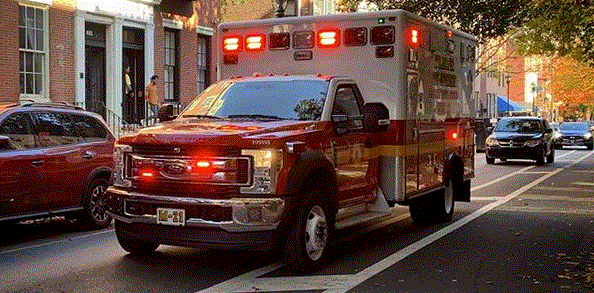
When a rural hospital closes, it doesn't just mean driving an extra 15 minutes. It often means an ambulance ride of 45 minutes to an hour to reach the next nearest trauma center. In cases of stroke, heart attack, or severe farming or industrial accidents, that extra time can be the difference between recovery, permanent disability, or death.
We have already seen the prelude to this. Over the last decade, several PA hospitals have either closed entirely or drastically scaled back services, shuttering maternity wards and ICUs to stay solvent.
More Than Just Healthcare
The potential closure of 12 more facilities carries devastating economic consequences as well.
In many rural Pennsylvania counties, the local hospital system is the largest single employer. A closure means the immediate loss of hundreds of high-paying jobs—doctors, nurses, technicians, and administrative staff—which ripples through the local economy, hurting small businesses and depressing property values.
What happens next?
 Hospital advocacy groups in Harrisburg are urgently lobbying state lawmakers for emergency funding and structural reforms to how rural healthcare is paid for. There are discussions about new designations that might allow rural hospitals to operate just as freestanding Emergency Departments without required inpatient beds to cut costs.
But for now, the clock is ticking. For residents in PA's most vulnerable communities, the question is no longer "if" another hospital will close, but "which one," and how far they will have to travel when an emergency strikes.