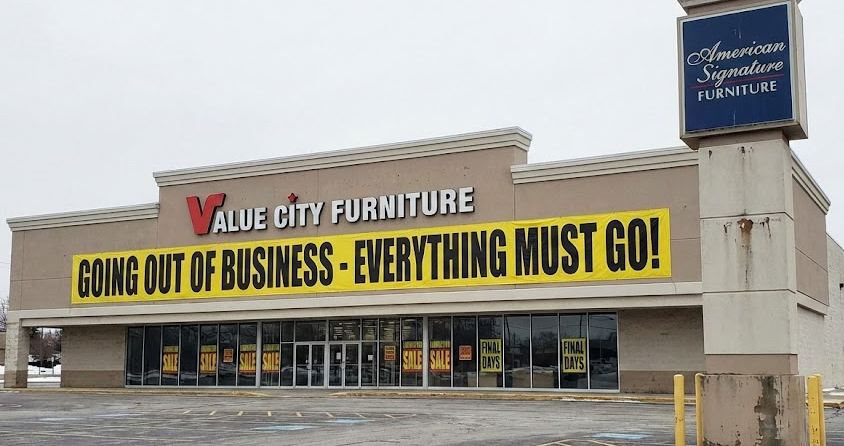
OHIO – A cornerstone of the American living room is disappearing. American Signature Inc., the parent company of the iconic Value City Furniture and American Signature Furniture brands, has announced it will shut down all operations and close all stores by early 2026.
The End of an Era: Value City and American Signature Furniture Set to Close All Doors by 2026
The move marks the end of a nearly 80-year legacy for the Ohio-founded retail giant, which once stood as a titan of affordable home furnishings across the Midwest and beyond.
From Boom to Bankruptcy
The regional institution's downfall followed a period of mounting financial difficulties that culminated in a bankruptcy filing earlier this year. While the furniture industry has faced headwinds from shifting consumer habits and supply chain volatility, the total liquidation of American Signature Inc. came as a shock to many long-time patrons.
Liquidation sales officially began on January 9, 2026, as the company looks to clear out its remaining inventory across dozens of stores. For many, these sales represent a bittersweet final opportunity to own a piece of a brand that has furnished Ohio homes since the mid-20th century.
Customer Frustration and "Caveat Emptor"
The closure hasn't been without turbulence. As the company entered bankruptcy proceedings, reports began to surface of significant consumer fallout.
Many customers who placed orders in late 2025 have reported that their furniture never arrived, while others have struggled with non-refundable deposits. Due to the bankruptcy's legal structure, many shoppers are at the back of the line for refunds, with deposits effectively frozen or lost.
Furthermore, with the parent company dissolving, the long-term validity of extended warranties purchased for prior items is in question. Retail analysts have noted that during a total liquidation of this scale, the priority often shifts from customer service to asset recovery for creditors.
A Changing Retail Landscape
 The loss of Value City Furniture is particularly poignant in Ohio, where the brand originated. What started as a local success story grew into a massive regional footprint, known for its accessible style and financing options. Its departure leaves a significant hole in the "big box" furniture market, likely to be filled by online-only retailers or larger national chains.
As neon signs dim across locations from the Miami Valley to the East Coast, the 2026 closure serves as a stark reminder of the fragility of traditional retail in the modern age.