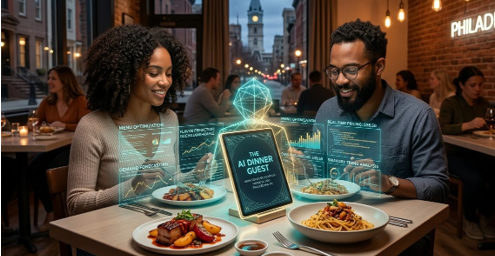
PENNSYLVANIA — If your last meal out in Pennsylvania felt suspiciously perfect—like the chef knew exactly what you were craving before you did—you might have been dining with an invisible guest. Across the Keystone State, from the high-energy kitchens of Philadelphia to the refined bistros of Pittsburgh, a quiet revolution is happening on the menu page. The bots have entered the kitchen, and they aren't just washing dishes—they're engineering the flavors.
While 2025 was the year restaurants tested AI for phone reservations and scheduling, 2026 is the year "Agentic AI" took over the master list. Restaurant operators are increasingly leveraging advanced algorithms to synthesize vast datasets—historical sales, real-time ingredient costs, local weather patterns, and even social media sentiment—to build menus designed for both maximum profitability and precisely targeted flavor.
The Rise of the "Swavory" Menu
The most visible impact of this bot-driven engineering is the explosion of complex flavor profiles known as "swavory"—the mashup of sweet and savory notes.
According to culinary data in early 2026, AI-driven flavor profiling has identified a massive spike in desire for layered, umami-rich complexity among younger diners. Pennsylvania chefs are now using AI "dinner guests" to predict which mashups will trend locally before they even hit the pan.
In Philadelphia, high-end eateries are utilizing these insights to create menus featuring gochujang-glazed pork belly paired with maple-chili roasted fruit. In Pittsburgh, the trend manifests in savory spaghetti topped with crunchy, fermented fruit toppings, designed by bots that predicted a local craving for "metamorphic textures"—foods that transition from crisp to melt-in-the-mouth as you eat. Even in the heart of Lancaster County, traditional farmhouse kitchens are experimenting with AI-optimized miso caramel dips for their heritage apple slices.
Efficiency Over Instinct
The shift isn't just about bold new tastes; it’s about survival in a razor-thin margin industry. Static menu costing cannot keep pace with 2026’s volatile supplier pricing.
AI menu engineering has shifted from a pricing exercise to a real-time margin management system. Algorithms monitor dynamic input costs and send automatic alerts to chefs when an item falls below a strict profitability threshold, allowing for immediate price adjustments or recipe substitutions before weeks of financial loss occur.
Predictive analytics allow these Pennsylvania kitchens to forecast demand with striking accuracy, often cutting food waste by nearly a third. The AI acts as a virtual kitchen manager, prioritizing orders based on preparation time to ensure every dish for a single table finishes simultaneously, maximizing productivity during the dinner rush.
The Customer View: Hospitality vs. Automation
For the diner, this integration is mostly invisible. You might notice personalized menu recommendations on self-service kiosks in fast-casual spots or receive tailored loyalty promotions through mobile apps, but the human element remains paramount in full-service dining.
Data indicates that Pennsylvanians are embracing the technological convenience, especially when it results in better food consistency and faster service. However, they still crave the genuine connection that defines hospitality. The successful 2026 Pennsylvania restaurant isn't the one that replaces its staff with robots; it’s the one that uses AI in the background to handle complexity, freeing its human team to deliver the warmth that keeps guests coming back.
The next time you open a menu in Harrisburg or Bethlehem and are tempted by a dish that seems bizarre yet irresistible—like Hojicha-roasted nutty sauce on a savory donut—remember: you aren't just reading the chef’s inspiration. You’re reading the calculated prediction of Pennsylvania’s newest dinner guest.