Philadelphia, PA
- One of Philadelphia's oldest streets is Elfreth's Alley. It is lined with Federal and Georgian-style houses and cobblestone sidewalks from the colonial era. Many of the original houses still stand, and many were once multi-family households. At one time, it was even home to famous people like Dolly Madison and Betsy Ross. Today, the Alley's's is primarily inhabited by couples.
Elfreth's Alley: A Walk Through Time on America's Oldest Residential Street
Step off the bustling streets of modern Philadelphia and onto the cobblestones of Elfreth's Alley, recognized as the nation's oldest continuously inhabited residential street, and you'll find yourself transported back centuries. Widely acknowledged as a remarkable living museum, this alleyway in Philadelphia's Old City neighborhood offers a tangible connection to America's colonial past, making it a must-see for history enthusiasts.
Origins: From Cart Path to Community
Established around 1702-1706, Elfreth's Alley began as a simple cart path, providing access between Front and Second Streets for merchants and tradespeople heading towards the Delaware River. It was named after Jeremiah Elfreth, a prominent blacksmith, landowner, and developer who lived and worked nearby (Source: Elfreth's Alley Association). The narrow street quickly developed into a close-knit community primarily populated by artisans, merchants, and the backbone of colonial Philadelphia.
A Glimpse into Colonial Life
The thirty-two houses lining Elfreth's Alley's's showcase stunning examples of early American Georgian and Federal-style architecture.
- Historic Homes: Many of the original structures still stand today, meticulously preserved. These homes, often small by modern standards, once housed families and apprentices and sometimes served as both residences and workshops for trades such as shipbuilding, silversmithing, and glassblowing.
- Cobblestone Charm: The cobblestone street itself adds to the authentic colonial atmosphere, inviting visitors to imagine the horse-drawn carts and daily life of centuries past.
Preservation and the "Living Museum"
Unlike many historical sites frozen in time, Elfreth's Alley remains a vibrant, active community that welcomes visitors, fostering a sense of connection and inclusion.
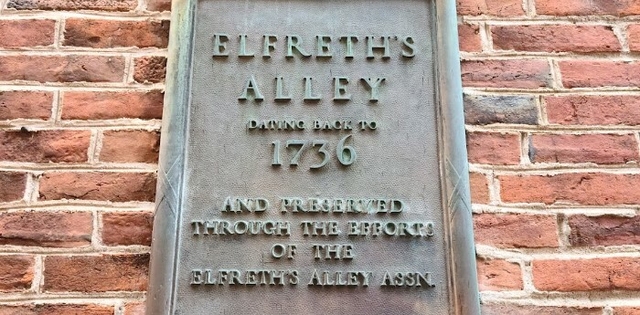
- The Elfreth's Alley Association works tirelessly to preserve these historic homes, inspiring visitors to value and support this important part of American heritage.
- A Living Museum: The Association fosters the concept of the AAlley as a "living museum." While respecting the privacy of current residents, visitors can experience the historic streetscape and learn about its past.
Visiting Elfreth's Alley
- Walking down the cobblestone street offers a unique chance for discovery, inviting visitors to imagine the daily life of colonial Philadelphia and feel connected to history.
- Elfreth's Alley Museum House: Located at houses #124-126, the museum offers a deeper dive into the lives of the Alley's early residents. Explore period rooms, view artifacts, and learn the stories behind the homes.
- Guided Tours: The Elfreth's Alley Association offers guided tours that provide rich historical context and stories about the residents. Tours are not daily, so check the association's website (elfrethsalley.org) for current schedules and availability before planning your visit.
- Special Events: The Association hosts various events throughout the year, such as the popular "Fête Day" in June, which often include open house tours, historical reenactments, and craft demonstrations. These events contribute significantly to the Association's preservation budget.
Elfreth's Alley is a true Philadelphia treasure and a remarkable piece of American history. As the nation's oldest residential street, it offers an unparalleled opportunity to step back into the colonial era. The combination of beautifully preserved architecture, a dedicated museum, informative tours, and its status as a living community makes Elfreth's Alley a unique and must-visit destination for anyone exploring historic Philadelphia.