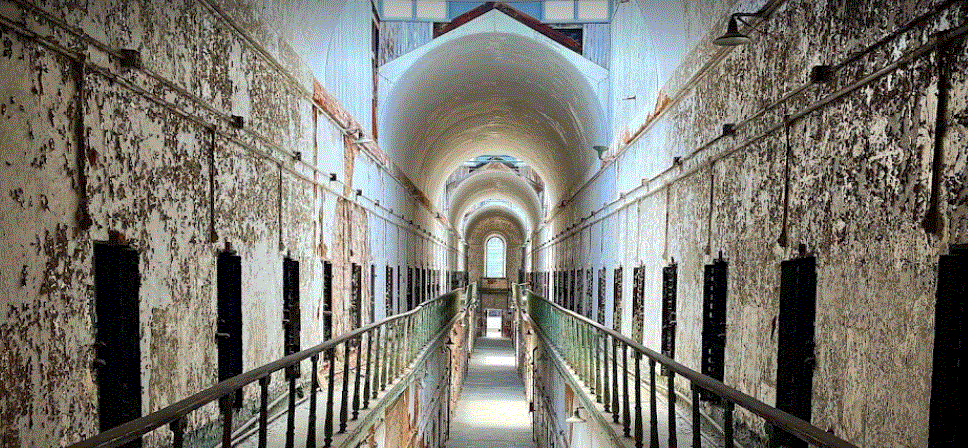
PHILADELPHIA- Eastern State Penitentiary is one of Philadelphia's most fascinating landmarks. Because of its imposing neo-Gothic architecture and its dark, complicated history with solitary confinement, the prison has generated a massive amount of lore.
Here is a breakdown of the most popular documented facts, alongside the myths and legends that continue to surround the site today.
The Historical Facts
The Invention of the "Penitentiary"
When it opened in 1829, Eastern State was not just a prison; it was a revolutionary social experiment designed by Quakers. It was the world's first true "penitentiary"—a word derived from the concept of inspiring penance or true regret in the hearts of criminals.
The "Pennsylvania System" of Isolation
The prison pioneered a system of total solitary confinement. Inmates lived, exercised, and ate alone. Cells were designed with small doors to force inmates to bow as they entered, and the only natural light came from a single skylight in the ceiling, known as the "Eye of God," meant to remind prisoners that they were always being watched from above. Whenever inmates were moved, guards placed hoods over their heads to prevent them from seeing or communicating with anyone.
Al Capone's "Luxurious" Stay
In 1929, notorious Chicago mob boss Al "Scarface" Capone served seven months of a one-year sentence at Eastern State for carrying a concealed, deadly weapon. Thanks to his immense wealth and influence, his time in solitary confinement was highly unusual. His cell on the "Park Avenue Block" was famously furnished with fine antique furniture, oriental rugs, oil paintings, and a cabinet radio.
Willie Sutton's 1945 Great Escape
In April 1945, infamous bank robber "Slick Willie" Sutton and 11 other inmates executed one of the most famous prison breaks in American history. Over the course of a year, the men had secretly dug a 97-foot tunnel out of the prison, perfectly engineering it to bypass the massive stone walls. Though Sutton was captured almost immediately after emerging in broad daylight, the tunnel remains a legendary piece of the prison's history.
The Popular Myths and Lore
Myth: Pep the Dog, the "Cat Murderer"
One of the most widely shared stories about Eastern State is that in 1924, Pennsylvania Governor Gifford Pinchot sentenced a black Labrador retriever named Pep to life in prison for murdering his wife's cherished cat. Pep even had an official mugshot taken with an inmate number (C-2559) around his neck.
- The Reality: Pep was entirely innocent. Governor Pinchot actually donated the dog to the prison to serve as an early form of a therapy dog, boosting inmate morale. The guards jokingly took his mugshot and registered him in the books, a stunt that newspapers sensationalized into a permanent urban legend.
Myth: Al Capone was Haunted in his Cell
According to local lore, Capone's relatively comfortable stay in his luxury cell was ruined by supernatural torment. The myth claims that guards frequently heard the mob boss letting out blood-curdling screams in the middle of the night, begging for someone named "Jimmy" to leave him alone. Ghost hunters and storytellers claim this was the vengeful spirit of James "Jimmy" Clark, a victim of the St. Valentine's Day Massacre, which Capone had orchestrated earlier that year.
- The Reality: While Capone did suffer from declining mental health later in life (due to neurosyphilis), there is no historical documentation from the correctional officers that he screamed at ghosts during his time at Eastern State.
Myth: The Unending Paranormal Activity
Because the extreme isolation of the Pennsylvania System drove many inmates to madness, and because guards sometimes used brutal physical punishments (like the "iron gag" and winter water baths), Eastern State has gained a modern reputation as one of the most haunted places in America.
- The Lore: Visitors and paranormal television shows frequently report hearing weeping in the corridors, seeing shadowy figures in the inaccessible guard towers, and encountering "The Soap Lady," an apparition supposedly wandering the second floor of the old women's cellblock. While this makes for incredible seasonal tourism, historians prefer to focus on the very real, very human psychological toll the building took on its 80,000 former inmates.