
PENNSYLVANIA - It is one of the most fascinating—and chaotic—true crime stories in early American history! The 1798 Bank of Pennsylvania heist had all the makings of a Hollywood thriller: an inside job, a devastating plague clearing out the city, and a bumbling culprit who practically turned himself in.
But the most incredible part of the story is the aftermath involving the wrongfully accused blacksmith, Patrick Lyon.
Because Lyon had previously been hired to fix the bank's vault doors, authorities immediately suspected him. He had fled the city to escape the yellow fever outbreak, which made him look even guiltier. When Lyon heard he was a suspect, he actually returned to Philadelphia to clear his name—only to be thrown into the Walnut Street Prison, where he contracted yellow fever and nearly died.
When he was finally exonerated and awarded his massive $12,000 settlement (a fortune at the time), Lyon didn't just take the money and move on. He wanted total vindication.
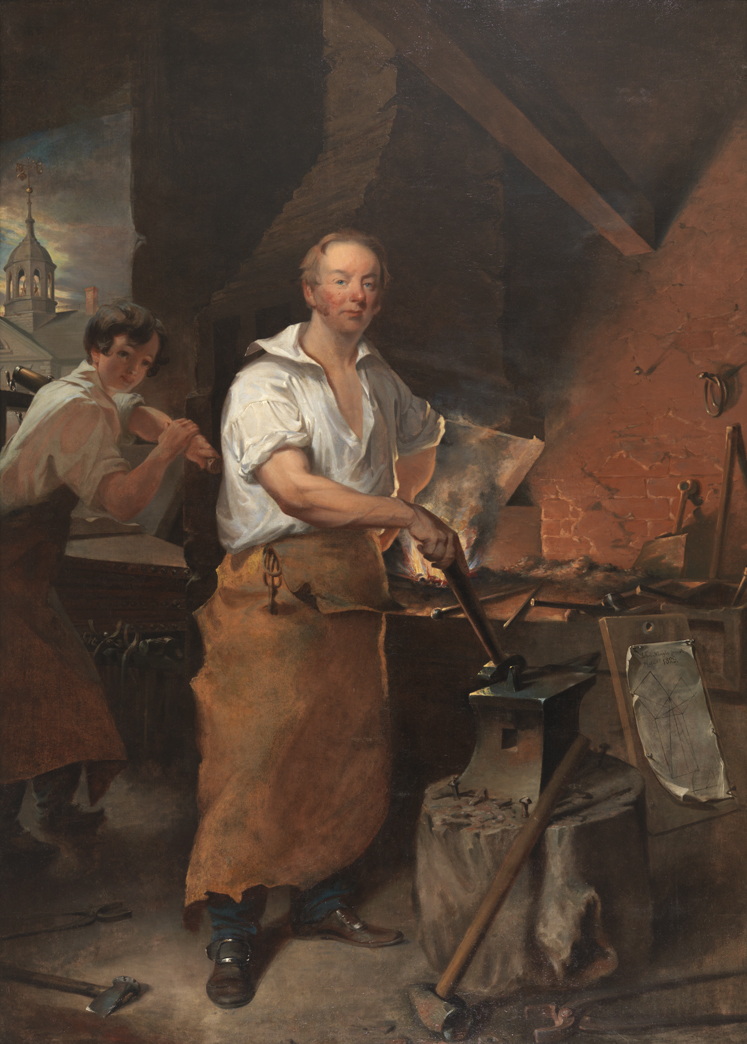 Patrick Lyon at the Forge by John Neagle. Source: PAFAHe used a portion of his settlement to commission a portrait by the renowned artist John Neagle. At a time when wealthy men were exclusively painted in fine suits and powdered wigs, Lyon insisted on being painted in his leather apron, sleeves rolled up, working at his anvil.
If you look closely at the background, Lyon had the artist include the cupola of the Walnut Street Prison—a permanent, public reminder of the injustice he suffered and a proud declaration of his identity as an honest, working-class tradesman.
Believe it or not, yes—the money was fully recovered, and the way it happened is just as absurd as the rest of the story.
After his accomplice Thomas Cunningham died of yellow fever just days after the heist, Isaac Davis was left with the entire fortune, which would be equivalent to over $3 million today. In what is widely considered one of the most foolish moves in criminal history, Davis began depositing the stolen cash into various Philadelphia banks—including the Bank of Pennsylvania, the exact institution he had just robbed.
His sudden, massive deposits immediately raised red flags. When confronted by authorities about his newfound wealth, Davis quickly confessed to the crime.
However, unlike the innocent Patrick Lyon who was suffering in the Walnut Street Prison, Davis had powerful connections. His uncle, Benjamin Brannon, was a prominent judge. Brannon stepped in and brokered a highly favorable plea deal with the Governor of Pennsylvania. If Davis provided full disclosure and returned all of the stolen money, he would receive a full pardon.
The deal was accepted; the bank got its money back in full, and the actual bank robber never spent a single day in jail.
 Share This Article on Social Media