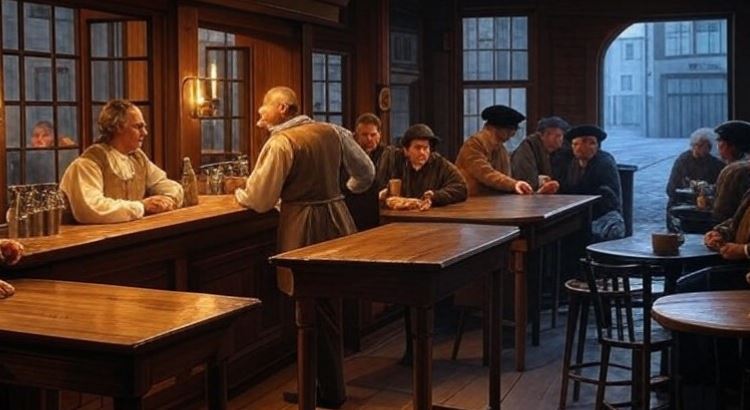
Philadelphia's status as one of America's premier beer destinations is not a modern craft phenomenon; it is an inheritance stretching back more than three centuries. Every autumn, as clinking steins and brass polka bands echo through open-air corridors, the city's harvest festivities tap directly into a deep German brewing lineage. To experience modern celebrations firsthand, check out the complete guide to Oktoberfest 2026 in Philadelphia: where to celebrate, eat, and drink this fall, showcasing the street parties and beer gardens carrying on these historic customs.
Birthplace of American Lager
Philadelphia's connection to German brewing traditions began in 1683, when Franz Daniel Pastorius and German Quaker and Mennonite settlers founded Germantown. However, the true revolution occurred in 1840, when German immigrant brewer John Wagner brought bottom-fermenting lager yeast from Bavaria to a small brewpub on St. John Street (now American Street) in Northern Liberties. Wagner produced the very first authentic lager brewed on American soil.
Prior to Wagner's arrival, American brewers relied almost entirely on British top-fermenting ales and porters. Crisp, bottom-fermented lagers required cold storage—known as lagering—which Bavarian brewers perfected in cellars and ice caves. Philadelphia's climate, river trade, and vast immigrant workforce made it the natural capital for this emerging brewing style.
Brewerytown and the Rise of Industrial Brewmasters
By the late 19th century, Philadelphia was recognized globally as the brewing capital of the Western Hemisphere. The epicenter was Brewerytown, a dedicated commercial district nestled along the Schuylkill River in North Philadelphia. Spanning more than ten city blocks, this industrial corridor housed dozens of major German-American breweries, including Bergner & Engel, the Christian Schmidt Brewing Company, and Class & Nachod.
The location was deliberate: the limestone bluffs alongside the Schuylkill provided natural subterranean vaults where brewers could ferment and cold-age massive quantities of seasonal Märzen and Bavarian lagers through the hot summer months. When September arrived, they unsealed these cold vaults to toast the autumn harvest—establishing an annual tradition that still anchors Philadelphia fall beer festivals.
The Living Legacy: Modern Riverwards Revelry
While Prohibition and industrial consolidation eventually shuttered historic Brewerytown, Philadelphia's passion for Bavarian brewing culture migrated into the Riverwards. Today, neighborhood corridors celebrate that historical foundation with massive public gatherings.
Events like the 15th Annual Frankford Hall Oktoberfest along Frankford Avenue preserve the classic 19th-century biergarten model, while neighborhood taprooms introduce limited-edition autumn lagers. To compare venues, tap lists, and festival formats across the city, explore our guide detailing where to celebrate Oktoberfest in Philly or see how two giant Oktoberfest celebrations take over the Riverwards this season.
 Share This Article on Social Media