VIRGINIA - Long before it was the "Mother of Presidents," Virginia was the very first foothold of the English empire in the New World. Its pre-statehood history is a saga of massive land grants that once stretched to the Pacific Ocean and a deep-rooted loyalty to the British Crown that earned it a famous nickname still used today.
Here is the history of what Virginia was called before it officially became a state in 1788.
1. Tsenacomoco (Pre-1607)
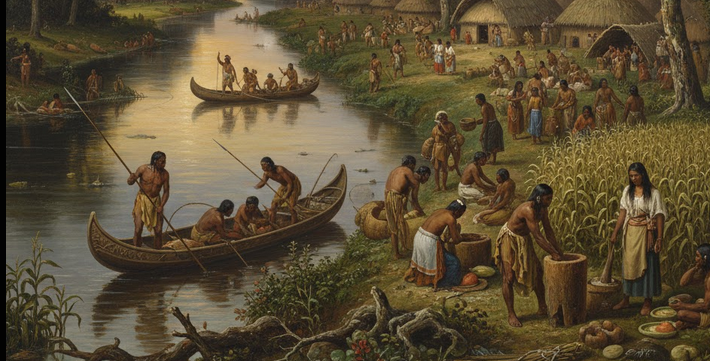
Before the English arrived, the land was not "Virginia" to the people living there. The Tidewater region was the heart of Tsenacomoco, a powerful political alliance of roughly 30 Algonquian-speaking tribes. It was governed by the paramount chief Powhatan. While the English later renamed the geography, the Indigenous name Tsenacomoco translates roughly to "densely inhabited land."
2. The Land of Virginia (1584 – 1606)
The name "Virginia" was first suggested by Sir Walter Raleigh in 1584. He named the entire coastal region—which at the time technically included everything from modern-day Maine to South Carolina—in honor of Queen Elizabeth I, the "Virgin Queen." During this era, Virginia wasn't a specific colony with borders; it was a vast, loosely defined territory claimed by the English.
3. The Colony of Virginia (1606 – 1624)
In 1606, King James I issued a charter to the Virginia Company of London. This turned "Virginia" from a vague region into a formal commercial enterprise.
- The First Settlement: In 1607, the company established Jamestown, the first permanent English settlement in North America.
- The "Sea to Sea" Grant: The 1609 charter was incredibly ambitious, claiming land that extended "from sea to sea"—meaning Virginia legally claimed most of the modern-day United States and even parts of Canada.
4. The Royal Colony: "The Old Dominion" (1624 – 1776)
In 1624, King James I revoked the Virginia Company's charter due to mismanagement and frequent conflicts, making Virginia a Royal Colony under the direct control of the King.
During the English Civil War (1642–1651), Virginia remained famously loyal to the monarchy (the "Cavaliers") even after King Charles I was executed. When King Charles II was restored to the throne in 1660, he allegedly began calling Virginia his "Old Dominion" to thank the colonists for their faithfulness. The name stuck, and Virginia's official seal for a time even proclaimed it the "fifth kingdom" of the empire.
5. The Commonwealth of Virginia (1776 – Present)
As the American Revolution began, Virginia moved away from "Colony" and "Province." In 1776, it adopted its first constitution and officially designated itself the Commonwealth of Virginia. This title was chosen to emphasize that the government was for the "common good" or "common wealth" of the people, rather than a possession of the British King.