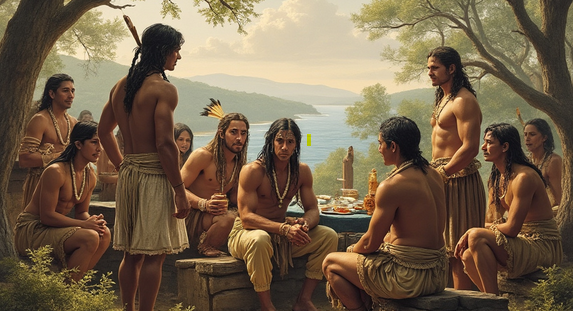
PENNSYLVANIA - When we think of Pennsylvania’s early history, we often start with William Penn and the founding of Philadelphia in 1682. However, for thousands of years before the arrival of Europeans, the land was home to a complex network of Indigenous nations.
Determining exactly how many people lived in Pennsylvania before the "Colonial Conquest" is a challenge for modern historians and archaeologists, but current research provides a fascinating window into the state's original population.
The Challenges of Counting the Past
Estimating pre-contact populations is difficult because Indigenous societies did not keep written census records in the way Europeans did. Instead, experts rely on:
- Archaeological Evidence: The size and number of village sites, longhouses, and agricultural remains.
- Early European Accounts: Journals from explorers and traders, though these often reflected populations already decimated by early disease outbreaks.
- Carrying Capacity: Calculations based on how many people the local environment (forests, rivers, and soil) could realistically support through hunting and farming.
The Primary Nations of Pennsylvania
Before the 1600s, Pennsylvania was primarily dominated by three major groups:
- The Lenape (Delaware): Inhabiting the Delaware River Valley in the east. They lived in small, decentralized villages.
- The Susquehannock: A powerful, Iroquoian-speaking group located in the Susquehanna River Valley in the central part of the state. They lived in large, fortified palisaded towns.
- The Monongahela & Erie: Located in western Pennsylvania and along the shores of Lake Erie. These groups were largely dispersed or absorbed by the mid-1600s due to warfare and disease.
Population Estimates
While figures vary, many historians estimate that at the peak of pre-contact civilization (roughly the year 1500), the population of what is now Pennsylvania was likely between 15,000 and 30,000 people.
- The Susquehannock: Estimates suggest they numbered between 5,000 and 7,000 at their height. They were known for their military strength and large, concentrated settlements.
- The Lenape: Spread across eastern PA, New Jersey, and Delaware, their total population was likely around 10,000 to 12,000, with a significant portion living within Pennsylvania's current borders.
- Western Groups: The Erie and various smaller tribes in the Ohio River Valley likely accounted for several thousand more.
The Great Decline: Disease Before Conquest
 It is important to note that the "Colonial Conquest" began with germs before it began with settlers. European diseases—such as smallpox, measles, and influenza—often traveled inland through trade routes long before the first white settlers arrived in person.
By the time William Penn signed his famous treaties in the 1680s, the Indigenous population of Pennsylvania had already been reduced by as much as 90%. The thriving "nations" the early explorers described had been consolidated into much smaller refugee groups, making the land appear more "empty" to European eyes than it actually had been a century prior.