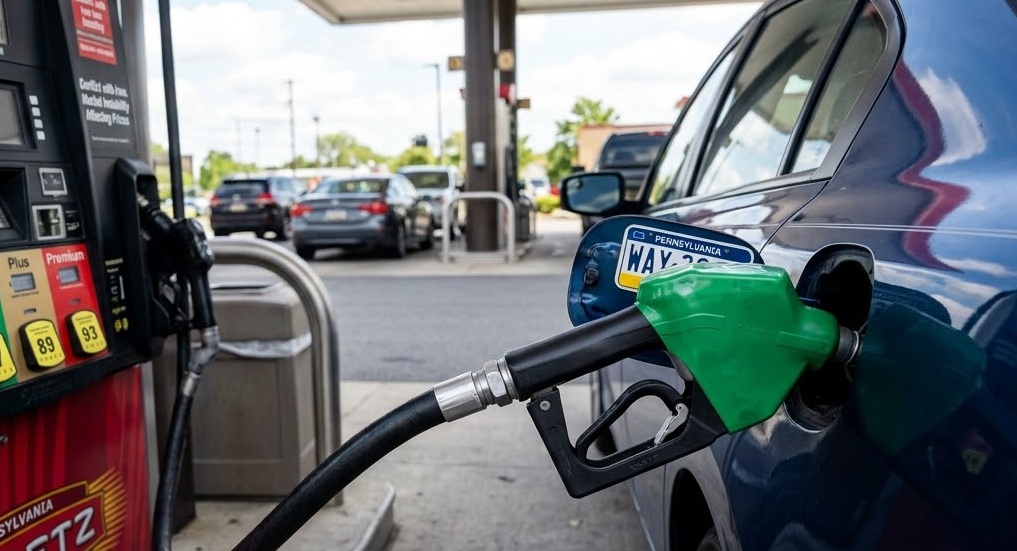
PENNSYLVANIA - As of mid-March 2026, Pennsylvania drivers are facing some of the steepest price hikes at the pump in years. While the state was already transitioning into the typically more expensive spring driving season, the sudden outbreak of conflict involving the U.S., Israel, and Iran on February 28 has sent global energy markets into a tailspin, with Pennsylvania feeling a significant share of the impact.
The "Strait of Hormuz" Effect
The primary driver of the current spike is the effective closure of the Strait of Hormuz. This narrow waterway is the world's most critical oil chokepoint, with roughly 20% of the global oil supply passing through it daily.
Following the initial strikes in late February, Iranian forces and regional instability have halted or deterred tanker traffic. This has forced global oil markets to recalibrate for a prolonged supply disruption, pushing crude oil prices—which account for over half the cost of a gallon of gas—from roughly $70 per barrel to peaks near $120 earlier this month.
Pennsylvania’s Current Averages
Pennsylvania consistently ranks among the states with the highest fuel costs in the Eastern U.S., partly due to one of the nation’s highest state gas taxes. As of this week, the numbers tell a sobering story:
- Statewide Average: The average for a gallon of regular gas has surged to approximately $3.82, up nearly 72 cents from just one month ago.
- Regional Hotspots: Prices in the Allentown-Bethlehem area and Lancaster are currently among the highest in the state, averaging around $3.85.
- Diesel Surge: Perhaps the most significant and painful jump has been in diesel fuel, which has climbed to a statewide average of $5.36. This is a massive blow to the state's significant trucking and logistics industry.
The Fastest Rate in Years
Petroleum analysts have noted that the rate of increase since the conflict began is one of the fastest recorded since the 2022 Russia-Ukraine shock. In the first full week of March alone, Pennsylvania saw a 46-cent jump in just seven days.
While some political leaders have suggested that energy prices will drop quickly once the conflict reaches a resolution, market experts warn that gas prices are historically "rocket and feather"—meaning they shoot up instantly on bad news but drift down very slowly even after a crisis subsides.
Impact on Local Communities
The ripple effect of $4.00 gas is hitting Pennsylvania’s wallet in multiple ways:
- Commuter Strain: For those in rural areas of PA where public transit is limited, the extra $15–$20 per fill-up is cutting directly into grocery and utility budgets.
- Logistics and Food Costs: Because Pennsylvania is a major hub for East Coast shipping (with the I-81 and I-78 corridors), the spike in diesel is already being passed down to consumers in the form of higher surcharges on home deliveries and grocery items.
 The 2026 Iran conflict has essentially erased the "winter discount" Pennsylvania drivers enjoyed earlier this year. With the summer driving season approaching and the geopolitical situation remaining volatile, analysts suggest that if the Strait of Hormuz remains contested, the state average could realistically cross the $4.00 threshold by April.