DELAWARE - The state of Delaware, historically known as the "First State," was the heart of the ancient homeland for several sophisticated Indigenous Nations, primarily belonging to the Algonquian language family. The region's major waterways—the Delaware River and the Delaware Bay—defined the territories and cultures of these original inhabitants, whose descendants remain in the area today.
The Two Major Indigenous Nations
Delaware's Indigenous history is dominated by two primary, but related, nations: the Lenape and the Nanticoke.
1. The Lenape (Lenni-Lenape)
The Lenape, meaning "Original People," had the most extensive ancestral territory, known as Lenapehoking, which included northeastern Delaware, New Jersey, eastern Pennsylvania, and parts of New York. The English colonists later referred to them as the Delaware Indians after the Delaware River, which was named for Thomas West, Lord De La Warr.
- Traditional Territory: The Lenape's presence in Delaware was primarily in the state's northern portion, centered on the Delaware River and Bay.
- Culture: They were renowned for their peaceful diplomatic culture and were among the first Native peoples to interact with European explorers (Dutch, Swedish, and English). They were semi-sedentary, practicing agriculture, particularly the "Three Sisters" (corn, beans, squash), and relying heavily on hunting and fishing.
- Dialects in the Region: The Lenape were traditionally divided into dialects and geographic regions. The Unalachtigo (or "People Who Live Near the Ocean") and the Unami (or "People Down River") were the groups most associated with the Delaware and southern New Jersey areas.
- Displacement: As with many Eastern tribes, colonial encroachment, disease, and fraudulent dealings (such as the infamous Walking Purchase in Pennsylvania, which pushed many south) led to their mass displacement westward, with most descendants now residing in Oklahoma and Ontario, Canada.
2. The Nanticoke
The Nanticoke are another prominent Algonquian-speaking nation with deep roots in the Delmarva Peninsula, particularly in southern Delaware. Their name, Nentego, translates to "Tidewater People."
- Traditional Territory: The Nanticoke homeland centered around the Nanticoke River and the Indian River Inlet in what is now Sussex County, Delaware, extending into Maryland's Eastern Shore.
- Culture: The Nanticoke were known for their skill as warriors and fishers, and for their complex religious and burial practices. They were also historically connected to the Conoy people (Piscataway).
- Resistance and Persistence: They were among the first to resist colonial intrusion in the mid-17th century. Unlike many other nations, a core group of Nanticoke people resisted complete removal and persevered in their traditional homeland along the Indian River in southern Delaware.
Modern Status and Recognition
Today, Indigenous communities continue to thrive in Delaware, maintaining their ancestral connections despite centuries of hardship and displacement.
- Nanticoke Indian Association: This group is state-recognized in Delaware and is based in Millsboro, Sussex County. They operate the Nanticoke Indian Museum, a National Historic Landmark, and hold an annual Powwow that attracts thousands.
- Lenape Indian Tribe of Delaware: Based in Kent County, near Cheswold, this group is also state-recognized by Delaware. They are descendants of the Lenape who remained in their traditional homeland, historically known as the "Delaware Moors" for its diverse heritage.
The history of Delaware's Native peoples is a powerful testament to their resilience, with their descendants actively preserving the culture and legacy of the state's first inhabitants.
Who Where The Native Peoples Of Delaware?
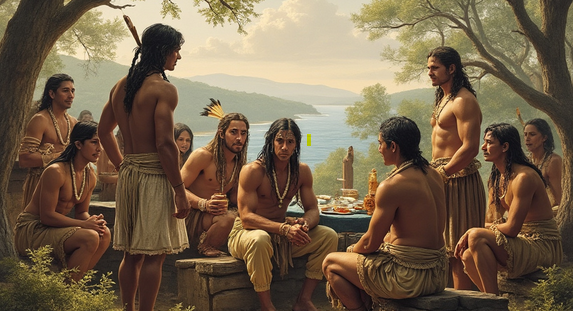
Who Where The Native Peoples Of Delaware?
Typography
- Smaller Small Medium Big Bigger
- Default Helvetica Segoe Georgia Times
- Reading Mode