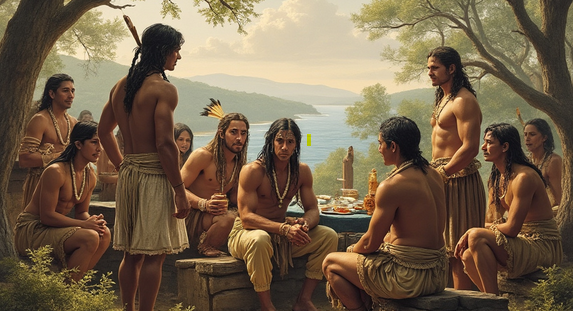
MICHIGAN - Michigan, defined by the waters of the Great Lakes, has been home to several powerful and distinct Indigenous nations for thousands of years. The history of Michigan's native peoples is inextricably linked to the land, forests, and abundant water resources of the Upper and Lower Peninsulas.
The major historical nations in the region are primarily Anishinaabe (or Anishinaabeg) peoples, a large group sharing linguistic and cultural ties. Today, the state of Michigan officially recognizes twelve federally recognized Native American tribes and several other un-recognized groups.
The Three Fires Confederacy (Anishinaabe)
The most prominent historical and contemporary presence in Michigan belongs to the Council of Three Fires, a long-standing political and cultural alliance of three closely related Algonquian-speaking nations: the Odawa, the Ojibwe, and the Potawatomi.
1. The Ojibwe (Chippewa)
- Self-Designation: Anishinaabe
- Region: Primarily settled in the Upper Peninsula (U.P.) and the northern part of the Lower Peninsula.
- Traditional Life: Known as the Elder Brothers of the Confederacy, the Ojibwe were skilled hunters, trappers, and fishermen. They were renowned for their use of birch bark for canoes, housing (wigwams), and food storage. They were also the "Keepers of the Water."
- Modern Presence: Ojibwe descendants are represented by several modern tribes, including the Sault Ste—Marie Tribe of Chippewa Indians and the Keweenaw Bay Indian Community.
2. The Odawa (Ottawa)
- Self-Designation: Nishnaabe
- Region: Settled primarily in the northern Lower Peninsula, including the areas around Lake Michigan and Lake Huron.
- Traditional Life: Known as the Middle Brothers of the Confederacy, the Odawa were powerful traders. Their name, Odawa, means "traders." They acted as intermediaries between the French explorers and other interior tribes, controlling vast trade routes on the Great Lakes.
- Modern Presence: Odawa descendants include the Grand Traverse Band of Ottawa and Chippewa Indians and the Little Traverse Bay Bands of Odawa Indians.
3. The Potawatomi
- Self-Designation: Neshnabé
- Region: Historically inhabited the southern and western parts of the Lower Peninsula.
- Traditional Life: Known as the Younger Brothers of the Confederacy, the Potawatomi were the "Keepers of the Fire," responsible for maintaining the central council fire. They were largely sedentary agriculturists, cultivating corn, beans, and squash, and also maintained extensive systems for harvesting wild rice.
- Modern Presence: Potawatomi descendants include the Nottawaseppi Huron Band of the Potawatomi and the Pokagon Band of Potawatomi Indians.
Other Significant Historical Peoples
While the Three Fires Confederacy dominated, other groups also held significant historical presence in the region:
- Menominee: Though their primary territory was Wisconsin, the Menominee utilized portions of the Upper Peninsula for hunting and fishing.
- Miami and Huron (Wyandot): Both groups maintained a historical presence and often intersected with the southern boundaries of the Potawatomi territory, particularly in the southeastern parts of the state near the Detroit River.
Modern Identity and Sovereignty
The history of Michigan's Native American nations is one of resilience against the devastating effects of the French and Indian War, the War of 1812, and subsequent treaties that led to forced removals and the establishment of reservations.
 Today, Michigan is a leader in tribal sovereignty and economic development. The state recognizes twelve federally recognized tribes, many of which operate highly successful casinos, resorts, and cultural centers. These modern nations are dedicated to revitalizing the Anishinaabemowin language (the common tongue of the Confederacy) and preserving their traditional relationship with the Great Lakes ecosystem.