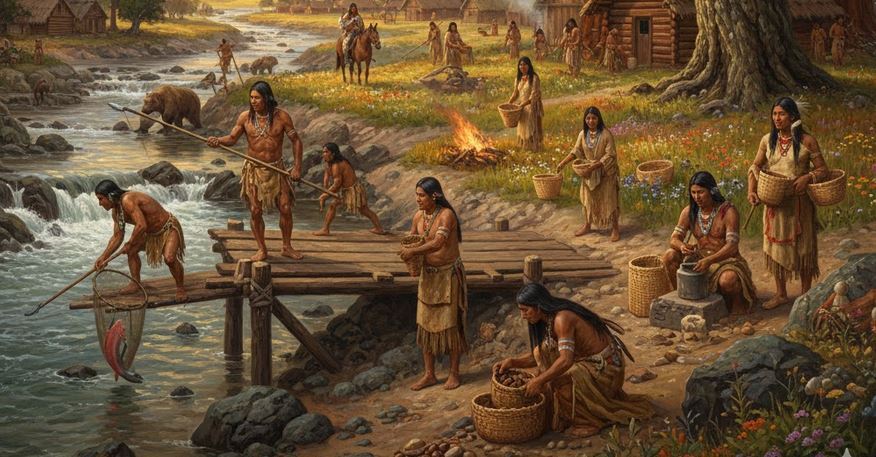
CONNECTICUT - Connecticut, one of the original thirteen colonies, has an Indigenous history deeply tied to its rivers, coastline, and dense forests. Before European contact, the land was inhabited by various tribes who primarily spoke languages belonging to the Algonquian family, specifically the Eastern Algonquian branch.
The history of these groups is characterized by sophisticated political organization, strategic alliances, and, later, fierce resistance against colonial expansion. Today, several Native American communities remain active in the state, with two tribes holding federal recognition.
The Major Historical Nations
The major tribes of Connecticut were organized into numerous smaller bands and often formed alliances or were subject to the authority of larger political entities, particularly the powerful Pequot and, later, the Mohegan.
-
Pequot: Historically one of the most powerful and feared groups in the region, the Pequot controlled a vast territory stretching across southeastern Connecticut. Their dominance over regional trade and resources led directly to the Pequot War of 1637 against English colonists and their Indigenous allies (including the Mohegan and Narragansett). The war was devastating and significantly altered the power structure in New England.
-
Modern Presence: The Mashantucket Pequot Tribe is one of the two federally recognized tribes in the state.
-
-
Mohegan: Formerly united with the Pequot, the Mohegan separated in the early 17th century under the leadership of their sachem (chief), Uncas. They strategically allied with the English during the Pequot War, thereby becoming the dominant local power in the following decades. Their traditional homeland is centered near the Thames River.
-
Modern Presence: The Mohegan Tribe is the second federally recognized tribe in the state.
-
-
Wangunk: A river-based tribe whose name means "at the bend in the river." Their settlements were primarily located along the fertile lands of the Connecticut River, especially in the central part of the state around present-day Middletown and Hartford.
-
Quinnipiac: These tribes resided primarily in the south-central coastal region of Connecticut, centered around what is now New Haven. They were among the earliest tribes in the area to sign land deeds with English settlers.
-
Podunk, Tunxis, and Mattabesic: These were regional groups, often smaller bands who spoke related Algonquian dialects and inhabited the central and western interior regions of the state.
Modern Identity and Sovereignty
The enduring presence of Connecticut's Indigenous peoples is a testament to their perseverance in maintaining their cultural identities and sovereignty despite colonial pressure and government policies of termination.
Federally Recognized Tribes
The two federally recognized tribes maintain their sovereignty and cultural institutions, notably through economic ventures that support their communities:
- Mashantucket Pequot Tribe: Located in southeastern Connecticut. They operate the Foxwoods Resort Casino.
- Mohegan Tribe: Located near Uncasville, the Mohegan Tribe is an economic force in the state, operating the Mohegan Sun casino complex.
State-Recognized Tribes
Several other Native American groups are recognized by the state of Connecticut, affirming their historical continuity and community presence:
- Golden Hill Paugussett
- Paucatuck Eastern Pequot
- Schaghticoke Tribal Nation
These nations continue to be vital parts of Connecticut's cultural landscape, working to preserve their languages, traditions, and distinct heritage linked to the state's land and waterways.
 Would you like to know more about the historical significance of the Pequot War and how it shaped early colonial New England?