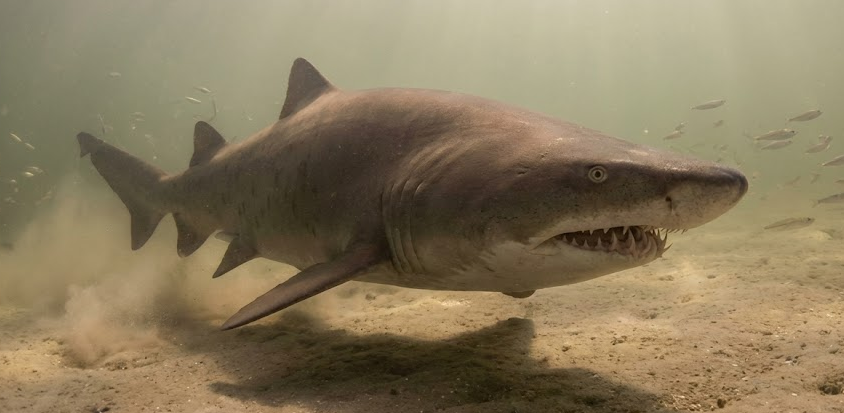
DELAWARE - If you mention "sharks" and "Delaware beaches" in the same sentence, most people instinctively think of the Jaws theme music. But the reality of what is swimming off the coast of Lewes and Cape Henlopen isn't a horror movie—it's a scientific marvel.
 Delaware Bay serves as one of the most important nursery grounds in the world for the Sand Tiger Shark. While they look ferocious, these local residents are actually some of the most docile and fascinating creatures in the ocean. Here is why these "snaggle-toothed" predators flock to Delaware, and what researchers have discovered about their surprisingly social lives.
The "Paper Tiger" of the Ocean
Encounters with Sand Tiger Sharks are common for surf fishermen, but they often cause unnecessary panic.
Identification is easy: They are brownish-gray and have a mouth full of jagged, needle-like teeth that protrude in all directions, even when their mouths are closed. They look terrifying.
However, marine biologists often call them "paper tigers." Unlike aggressive species like Bull Sharks, Sand Tigers are generally sluggish and non-aggressive toward humans. They spend their time cruising the bottom of the bay, looking for menhaden, skates, and crustaceans. If you leave them alone, they will almost certainly leave you alone.
Why Delaware Bay?
For decades, researchers from Delaware State University and the University of Delaware have tracked these sharks using acoustic telemetry. They found that the bay acts as a critical summer vacation spot and nursery.
The shallow, nutrient-rich waters provide two things juvenile sharks need to survive:
- Safety: The murky water and sandbars offer protection from larger open-ocean predators (like Great Whites).
- Food: The bay is an all-you-can-eat buffet of baitfish during the summer months.
The Discovery of Shark "Cliques"
One of the most groundbreaking discoveries to come out of Delaware in recent years is that these sharks aren't the lonely hunters we thought they were.
By analyzing tracking data, researchers found that Sand Tiger Sharks in Delaware Bay actually form social groups, or "cliques." They have specific "friends" they travel with and other individuals they actively avoid. This level of social complexity is rare in the fish world and suggests these animals are far more intelligent than previously believed.
Rules of Engagement: "If You Don't Know, Let It Go"
Because their population was decimated by overfishing in the late 20th century, Sand Tiger Sharks are a prohibited species in Delaware.
If you are surf fishing this summer, you must know the rules:
- Do Not Remove Them from the Water: It is illegal to drag a prohibited shark up onto the dry sand for a photo. Their internal organs can be crushed by their own weight without the water to support them.
- Cut the Line: If you hook one, the law requires you to release it immediately to maximize its chance of survival.
- The Golden Rule: If you cannot 100% identify a shark species, release it.
Next Steps:
-
Visit the Lewes Historical Society to learn about the bay's maritime history and understand why the ecosystem is so rich.
-
Watch the Surf: If you see a fisherman struggling with a heavy line at Cape Henlopen State Park, stay back. It’s likely a Sand Tiger or a Sandbar Shark, and keeping the area quiet helps the angler release it safely.