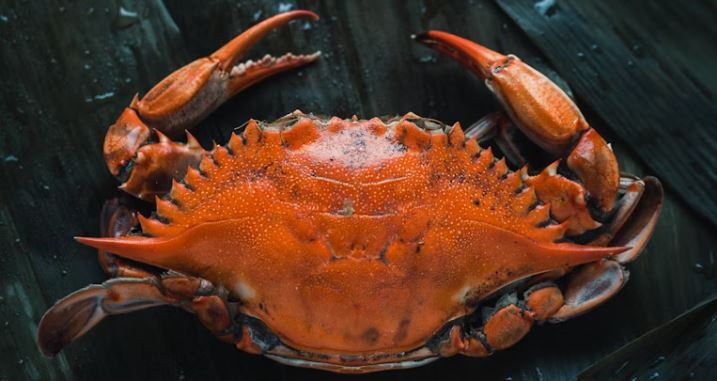
MARYLAND - There is a specific sound that defines a Maryland summer. It isn't the ocean waves or the cicadas; it's the crack-thump-sizzle of wooden mallets hitting hard shells on brown paper, followed by the hiss of a cold beer opening.
 But if you sit down at a crab house in Annapolis or Baltimore this year, you might notice two things: the prices are steeper, and the locals are watching you to see if you know what you're doing. Here is the truth about the current state of Maryland's most famous export, and the step-by-step guide to eating one without looking like a tourist.
The 2026 Crab Forecast: Why You're Paying More
Before you order a bushel, you should know what's happening in the water. The Blue Crab population in the Chesapeake Bay is famously cyclical, but recent reports have watermen and biologists concerned.
According to the 2025 Winter Dredge Survey, the total blue crab population dipped to an estimated 238 million, a significant drop from the previous year. While the population isn't "crashing" (it's still above the minimum threshold for sustainability), the number of juvenile crabs has been low for six years in a row.
What this means for your wallet:
- Expect to pay a premium. A bushel of "Jumbos" (the largest males) can easily run over $300-$400 on holiday weekends.
- Go for the females? Traditionally, Marylanders mostly eat male crabs ("Jimmies") and leave the females ("Sooks") to reproduce. However, buying female crabs is often cheaper. Just know that some die-hard locals consider it bad luck or bad conservation to eat the mamas.
The Great Spice Debate: Old Bay vs. J.O.
Here is a secret that might shock visitors: Most Maryland crab houses do not use Old Bay on their steamed crabs.
While Old Bay is the king of retail (and perfect for shrimp, popcorn, and Bloody Marys), it is too fine to stay on the shell during steaming.
Instead, almost every crab shack uses J.O. #2 Spice. It is a fflake-salt-based blend made in Baltimore that clings to the crab shell like grit. When you lick your fingers after picking a crab, you are almost certainly tasting J.O., not Old Bay.
How to Pick a Crab (The "Local" Way)
Do not use a nutcracker. Do not smash the center of the crab with your mallet (you'll get shell shards in your meat). Follow this method to maximize yield and respect:
- The Claws: Twist them off first. Use the mallet gently to crack the claw, just enough to pull the meat out on the tendon (the "crab lollipop").
- The Apron: Flip the crab over. Look for the flap on the belly (shaped like the Washington Monument for males, the Capitol Dome for females). Pry it up and snap it off.
- The Shell Pop: Wedge your thumb or a knife into the hole where the apron used to be. Pull the top shell away from the body. (Don't throw this away yet—there's good "mustard" in the corners!)
- The Clean Up: You will see gray, feathery gills. These are the "Devil's Fingers." They are not poisonous, but they taste like filters. Scrape them off and discard. Break off the mouthparts at the front.
- The Crack: Hold the body in two hands and snap it in half like a Kit-Kat bar.
- The Backfin: This is the money move. Take one half and gently squeeze the swimming leg while pulling the white meat chunks out from the back chamber. This is the Jumbo Lump—the sweetest, most expensive meat on the crab.
When is the Best Time to Go?
Tourists flock in July, but locals know the truth: Wait for "Rocktober."
In September and October, the crabs are "heavy." They have spent all summer eating and fattening up for winter dormancy. The meat is sweeter, the shells are harder, and the prices often drop slightly as the beach crowds vanish.
Next Steps:
- Check the "Bushel Price" before heading to a crab house. Prices change daily based on the catch.
- Bring Your Own Knife: While crab houses provide mallets, a small paring knife is the secret weapon for getting every last bit of meat.
- Video Guide: If you've never picked a crab before, watching a 30-second tutorial will save you a lot of frustration.
Here is a video guide on the proper technique to visualize the steps above: How to Pick a Blue Crab