PENNSYLVANIA — When you think of historic Pennsylvania cuisine, your mind probably jumps straight to the 20th century. You picture the invention of the Philly cheesesteak in the 1930s, the rise of the neighborhood hoagie shop, or classic Pennsylvania Dutch bakeries turning out whoopie pies and shoofly pie.
But what were locals eating centuries before any of that existed? What did a night out look like before the United States was even a country?
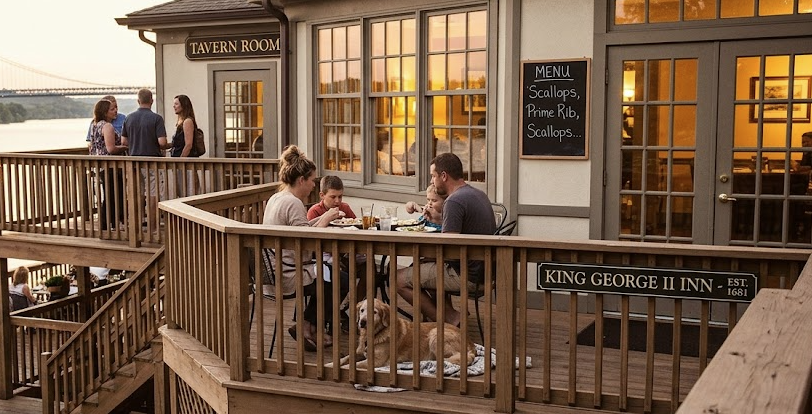
To find the answer, you have to travel to a quiet, scenic spot along the Delaware River in Bucks County. Here sits a massive piece of living culinary history that has survived wars, industrial revolutions, and changing modern tastes. It is the King George II Inn, officially recognized as the oldest continuously operating inn and restaurant in Pennsylvania.
The Birth of a Colonial Landmark
The story begins in 1681, the same year William Penn was granted the charter for Pennsylvania.
A man named Samuel Clift was granted a license to operate a ferry across the Delaware River, connecting Bristol, Pennsylvania, to Burlington, New Jersey. Realizing that weary travelers needed a place to rest, drink, and eat while waiting for the boat, Clift opened a small tavern on the riverbank.
Over the decades, the building expanded and changed names several times, eventually becoming the King George II Inn. It served as a critical community hub during the colonial era. Legend holds that everyone from George Washington to James Madison walked through its doors, seeking a warm meal and a cold pint of ale.
What Was on the Menu in 1681?
If you walked into the tavern during its earliest days, you would not be handed a printed menu, and you certainly weren't ordering a burger and fries.
In the late 17th and early 18th centuries, the tavern menu was entirely dictated by what was available locally and what could be preserved without refrigeration.
-
The Main Courses: Dining was a hearty, heavy affair. Guests were typically served massive portions of roasted local game (like venison, rabbit, or wild fowl), thick mutton stews, and savory meat pies baked in a wood-fired hearth.
-
The Sides: Meals were heavily supplemented with root vegetables that could survive the winter in a cellar—think turnips, carrots, and potatoes—alongside thick, crusty loaves of freshly baked bread.
-
The Drinks: Water from the river was often unsafe to drink, so tavern guests hydrated almost exclusively with fermented beverages. Expect massive tankards of dark ale, hard cider, and hot rum punches to cut through the freezing Pennsylvania winters.
Surviving the Centuries
The true miracle of the King George II Inn is its sheer resilience. While thousands of historic taverns burned down or were demolished to make way for modern highways, this Bristol landmark adapted.
Through the Revolutionary War (where British troops occupied the town), the rise of the nearby Delaware Canal, and the eventual boom of modern restaurant culture, the Inn kept its doors open and its kitchens firing.
What to Order Today
Today, you do not have to settle for mutton stew. The King George II Inn has perfectly balanced its deeply historic atmosphere with a thoroughly modernized, elevated menu.
When you visit this weekend, you can request a table with a stunning view of the Delaware River or sit in the historic tavern room.
-
The Modern Go-To Order: Start with their famous French Onion Soup or a plate of fresh calamari. For the main course, the kitchen turns out incredible prime rib, pan-seared scallops, and a massive, modernized tavern burger.
You can wash it down with a local Pennsylvania craft beer—a massive upgrade from the warm colonial ale—and raise a glass to over 340 years of uninterrupted service.