NEW JERSEY — If you drive across the Delaware Valley today, the signs of the "Retail Apocalypse" are not hard to find. We have all grown accustomed to the sight of half-empty parking lots, shuttered department stores, and massive, dead malls, slowly awaiting the wrecking ball or a mixed-use redevelopment plan.
But there was a time when the concept of the indoor shopping mall wasn't a fading relic—it was an absolute architectural marvel.
Long before the era of next-day delivery, New Jersey was actually the epicenter of a massive retail revolution. Let's take a step back to 1961 and walk through the doors of the very first enclosed, climate-controlled shopping mall east of the Mississippi River.
The Birth of an East Coast Legend
In the late 1950s, shopping was still a heavily downtown, main-street experience. If you wanted to visit a major department store, you took the train or drove into Center City Philadelphia or downtown Camden.
That all changed on October 11, 1961, when the Cherry Hill Mall officially opened its doors.
Designed by legendary architect Victor Gruen—the pioneer of the American shopping mall—it was pitched as a utopian, weather-proof downtown for the rapidly expanding suburbs. The mall was so heavily anticipated and culturally significant that the surrounding township (formerly known as Delaware Township) literally changed its name to Cherry Hill to capitalize on the mall's prestige.
What Did the Mall Look Like in 1961?
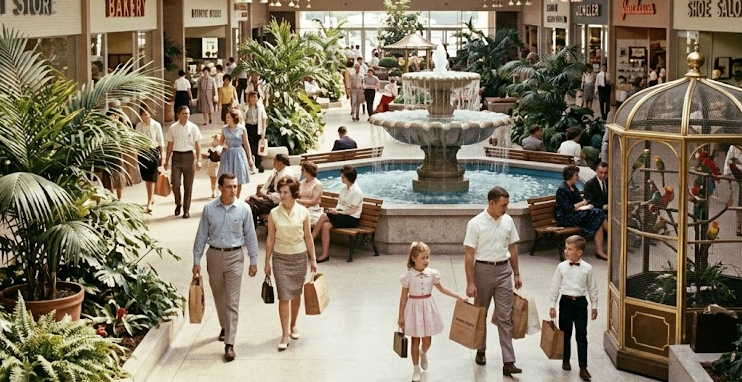
If you walked through the doors during its opening decade, you were treated to a sensory experience that went far beyond buying clothes. Gruen's design was intended to make shoppers feel like they were strolling through an exotic, eternal spring.
- The Atmosphere: The original concourses were bathed in natural light from massive skylights and filled with lush, tropical plants. The mall famously featured cascading fountains and large aviaries filled with exotic, brightly colored birds.
- The Anchors: The mall was originally anchored by two massive regional powerhouses: Strawbridge & Clothier (which featured a legendary food hall) and Bamberger's.
- The Culture: Going to the Cherry Hill Mall wasn't a quick errand; it was an all-day event. Families would dress up in their Sunday best to walk the promenade, dine at the Cherry Hill Inn, or catch a movie at the original twin cinema.
Surviving the Retail Apocalypse
The most incredible part of Cherry Hill Mall's story isn't how it started—it's that it is still standing.
Over the decades, as the retail landscape shifted rapidly, countless other regional malls in New Jersey (such as Burlington Center Mall and Echelon Mall) fell into steep decline or were completely abandoned.
Cherry Hill survived by ruthlessly adapting. Instead of clinging to the past, the property owners initiated massive, multi-million-dollar renovations. They ripped out the fading mid-century aesthetics, transitioned the tenant list to focus heavily on high-end, luxury brands (like Nordstrom, Apple, and Zara), and built a massive exterior "Restaurant Row" featuring elevated dining options like The Capital Grille and Seasons 52.
The Retail Takeaway
While the exotic birds and the classic Strawbridge's sign are long gone, the original blueprint remains. The Cherry Hill Mall proved that the "Retail Apocalypse" doesn't have to be a death sentence. By constantly evolving to meet modern consumer needs, New Jersey's first enclosed mall remains one of the most profitable and heavily trafficked retail destinations in the country today.