OHIO — When you think of historic Ohio cuisine, your mind probably jumps straight to the 20th century. You picture the unique, spaghetti-topped Cincinnati chili from the 1920s, the rich peanut butter-and-chocolate buckeyes that became a state staple, or perhaps a classic breaded pork tenderloin sandwich that dominates Midwestern menus.
But what were locals eating centuries before any of that existed? What did a night out look like before Ohio was even a state?
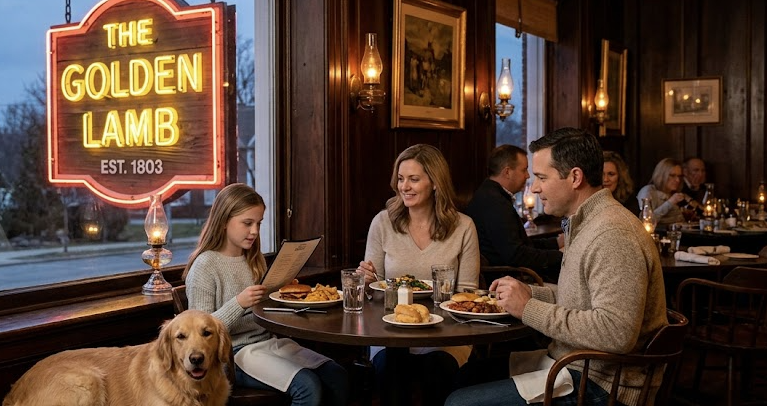
To find the answer, you have to travel to a charming town in Warren County, just north of Cincinnati. Here sits a massive piece of living culinary history that has survived wars, pioneers, and changing modern tastes. It is The Golden Lamb, officially recognized as the oldest continuously operating business and restaurant in the state of Ohio.
The Birth of a Pioneer Landmark
The story begins in 1803—the same year Ohio was admitted to the Union as the 17th state.
A man named Jonas Seaman was granted a license to operate a "house of public entertainment" in the newly founded town of Lebanon. Weary travelers, pioneers, and politicians moving across the frontier needed a place to rest, drink, and eat, and Seaman provided a critical community hub.
Over the decades, the building expanded and transformed, eventually becoming The Golden Lamb. Its strategic location on key stagecoach lines made it one of the most famous and popular inns on the frontier. The hotel still operates, proudly advertising the 12 U.S. presidents (from William Henry Harrison to Ronald Reagan) who have stayed and dined there.
What Was on the Menu in 1803?
If you walked into the tavern during its earliest days, you would not be handed a printed menu, and you certainly weren't ordering a burger and fries.
In the early 19th century, the tavern menu was entirely dictated by what could be produced or hunted locally and what could be preserved without refrigeration.
- The Main Courses: Dining was a hearty, utilitarian affair. Guests were typically served whatever the kitchen had prepared that day—a custom known as the "ordinary." This often included large portions of roasted wild game (such as venison, wild turkey, or bear), salted pork stews, and savory pot pies cooked over a hearth.
- The Sides: Meals were heavily supplemented with root vegetables that could survive the winter in a cellar—think turnips, potatoes, and cornmeal-based foods—alongside thick, dense loaves of freshly baked bread.
- The Drinks: Water was often unreliable, so tavern guests hydrated almost exclusively with fermented beverages. Expect massive tankards of hard cider, dark ale, and plenty of corn Whiskey, which was a staple on the frontier.
Surviving the Centuries
The true miracle of The Golden Lamb is its sheer resilience. While thousands of historic frontier taverns burned down or were demolished to make way for modern developments, this Lebanon landmark adapted.
Through the Civil War, the rise and fall of the canal system, and the eventual boom of modern restaurant culture, The Golden Lamb kept its doors open and its kitchens firing. It masterfully blends its deeply historic atmosphere with modern culinary standards.
What to Order Today
Today, you do not have to settle for salted pork stew. The Golden Lamb has perfectly balanced its deeply historic atmosphere with a thoroughly modernized, elevated menu.
When you visit this weekend, you can request a table in one of the beautifully preserved, antique-filled dining rooms, each named after a famous historical guest.
-
The Modern Go-To Order: Start with their famous Sauerkraut Balls or a plate of warm, homemade cornbread. For the main course, the kitchen is renowned for its original-recipe Golden Lamb roast turkey and gravy, a classic Ohio fried chicken, and a range of premium, expertly cooked steaks.
You can wash it down with a local Ohio craft beer or a glass from their extensive wine list and raise a glass to over 223 years of uninterrupted service.