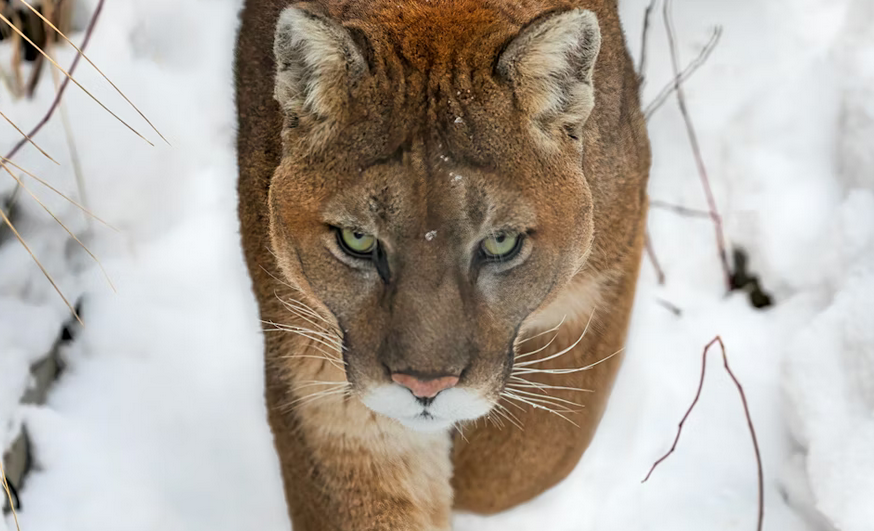
WEST VIRGINIA - Residents across several West Virginia counties are being urged to exercise extreme caution after a series of "brazen" predator sightings in residential neighborhoods. Local wildlife officials and law enforcement have issued warnings following reports of a large mountain lion (also known as a cougar or puma) roaming through backyards, appearing remarkably unafraid of human presence.
While the West Virginia Division of Natural Resources (WVDNR) has historically maintained that there is no breeding population of mountain lions in the state, recent high-quality doorbell camera footage and eyewitness accounts have made the threat impossible to ignore.
"It Stared Right at the camera."
The most recent sighting occurred in the early morning hours in the outskirts of Morgantown, where a homeowner captured crystal-clear footage of a large tan feline slinking past a child's playset.
"It didn't look like a stray cat or a bobcat. This thing was five feet long with a thick, heavy tail," said the homeowner. "It wasn't running or hiding. It was just walking like it owned the place. It even stopped and stared right at the ring camera for a few seconds before jumping a six-foot fence like it was nothing."
Similar reports have surfaced in Kanawha and Berkeley counties, with residents reporting missing small pets and finding large, distinctive tracks in muddy garden beds.
Why Is This "Brazen" Behavior Different?
Typically, large predators like cougars are elusive and avoid human contact at all costs. However, wildlife experts suggest several reasons for this sudden shift in behavior:
- Urban Encroachment: As residential developments push further into wooded corridors, natural hunting grounds are shrinking, forcing predators into suburban "green belts."
- Easy Prey: Unsecured trash, outdoor pet food, and small domestic animals (cats and small dogs) provide an "easy meal" that can override a predator’s natural fear of humans.
- Young Males on the Move: Young male cougars are known to travel hundreds of miles from western states in search of new territory, often following river corridors that lead them directly into populated areas.
Safety Guidelines: How to Protect Your Family
The WVDNR is advising residents to take immediate "predator-proofing" steps to ensure their backyards don't become a hunting ground:
- Secure the Perimeter: Do not leave small pets outside unattended, especially at dawn or dusk when predators are most active.
- Eliminate Food Sources: Bring pet bowls inside and ensure trash cans are locked and stored in a garage or shed.
- Lighting: Motion-activated floodlights can often startle a stalking predator and discourage them from lingering near your home.
- Don't Run: If you encounter a large predator, do not turn your back or run. This triggers their predatory chase instinct. Instead, stand tall, wave your arms, and make as much noise as possible to appear intimidating.
Reporting Sightings
Officials are asking the public to report any sightings of large, long-tailed cats immediately. If you have video footage or photos of tracks, contact your local WVDNR district office. Do not attempt to track or corner the animal yourself.
The state remains in a heightened state of awareness as biologists work to determine if this is a lone traveler or a sign of a larger shift in West Virginia's ecosystem.