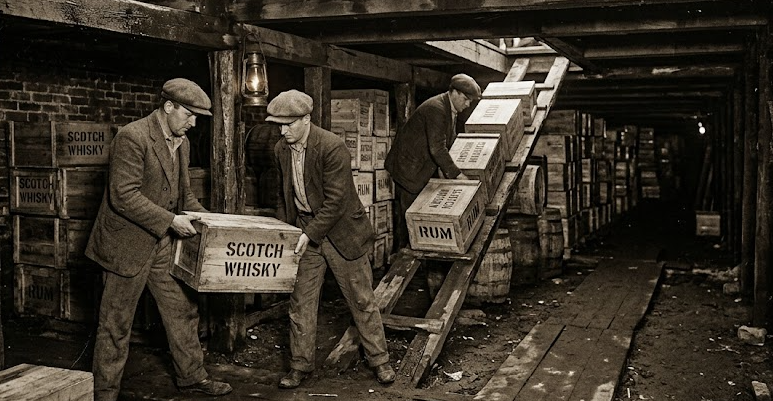
NEW JERSEY - Long before it was the land of neon lights and family vacations, the New Jersey coastline was the frontline of America's most lucrative illegal industry. During Prohibition, the Jersey Shore wasn't just a place to get a drink—it was the primary gateway for millions of gallons of illicit alcohol entering the United States.
From the salt marshes of Highlands to the glitzy hotels of Atlantic City, the state developed a sophisticated underground infrastructure that still exists beneath the feet of unsuspecting tourists today.
The Rise of the "Boardwalk Empire"
While the entire coast was active, Atlantic City was the crown jewel of the bootlegging era. Under the iron-fisted rule of political boss Enoch "Nucky" Johnson, the city was famously "wide open." While the rest of the country was dry, Atlantic City was a sprawling, 24-hour party where the police were paid to look the other way as rum-runners unloaded their ships right on the beach.
The Subterranean Highway
To move the "hooch" from the shoreline to the speakeasies without drawing federal attention, a network of hidden tunnels was constructed.
- Speakeasy Basements: Many historic buildings along the coast, particularly in towns like Port Monmouth and Atlantic City, featured reinforced basements with hidden "liquor lockers" behind false walls.
- The Tunnel Networks: In several coastal towns, tunnels were dug connecting beachfront estates to inland garages. This allowed trucks to be loaded entirely out of sight of any stray "revenuers" or federal agents patrolling the main roads.
- The "Spy House" Connection: Even older structures were rumored to have been used during this era, serving as centuries-old maritime hideaways to store crates of Canadian Whiskey.
Rum Row: The Floating City
Just three miles off the Jersey coast sat "Rum Row"—a literal line of foreign ships anchored in international waters, loaded to the gills with alcohol.
Each night, "contact boats"—small, lightning-fast vessels equipped with powerful aircraft engines—would race out from the Jersey inlets, load up, and sprint back to shore. These boats were often faster than anything the Coast Guard possessed, leading to high-speed chases through the narrow, winding waterways of the Barnegat Bay.
The Legacy of the Bootleggers
The wealth generated during this era built the legendary Atlantic City skyline and established the Jersey Shore as a premier entertainment destination. When Prohibition was finally repealed in 1933, many of the "legitimate" businessmen who owned the Shore's most famous hotels and clubs owed their fortunes to the midnight runs made through the marshlands.
The Modern Mystery: Occasionally, during construction or after major coastal storms, a section of an old brick tunnel or a cache of rotting wooden crates is still uncovered beneath a boardwalk or an old Victorian home—a silent reminder of when the Shore was the wildest place in America.
Sources:
- Nelson Johnson: Research on Atlantic City political history
- New Jersey State Police Museum: Historical archives on the Prohibition Era
- Atlantic City Historical Museum: Records on the "Rum Row" contact boats