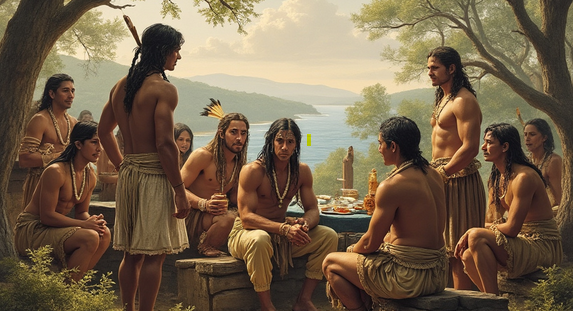
OHIO - The Ohio Valley, known for its fertile lands and extensive river systems, including the Ohio and Muskingum Rivers, has been a crucial region for Indigenous cultures for thousands of years. From the early mound-building societies to the powerful nations encountered by European and American settlers, the history of Ohio's Native peoples is rich and complex.
The Indigenous Peoples of Ohio: Nations of the River Valleys
At the time of sustained European contact (roughly the mid-to-late 17th century), the region was a dynamic borderland, initially largely depopulated by disease and conflicts (such as the Beaver Wars). Still, it later repopulated by displaced nations seeking new territories.
Primary Pre-Contact Societies (Ancient Ohio)
Long before the historic tribes settled in the area, Ohio was the heartland for sophisticated mound-building cultures:
- Adena Culture (c. 1000 BCE – 200 CE): Known for building conical earth mounds, often serving as burial sites.
- Hopewell Culture (c. 200 BCE – 500 CE): This culture is famous for its extensive earthworks and enclosures, which often took intricate geometric shapes (circles, squares, octagons). Sites like the Newark Earthworks demonstrate a high level of astronomical and mathematical knowledge and are part of a massive trade network that stretched across North America.
- Fort Ancient Culture (c. 1000 CE – 1750 CE): Successors to the Hopewell, known for large, palisaded villages and intensive maize agriculture. Some archaeologists believe they are the ancestors of the later Shawnee nation.
Historic Tribal Nations (17th - 19th Centuries)
By the 18th century, the Ohio Country was home to several distinct nations that migrated into the region:
- Shawnee: Perhaps the most prominent nation in Ohio history, their name is thought to mean "southerner" in Algonquian. They held territories across southern and central Ohio and were known for their strong resistance to American expansion, led by figures like Tecumseh and his brother, Tenskwatawa (The Prophet).
- Miami (Myaamia): Occupied western Ohio and parts of Indiana. They formed a powerful confederacy and successfully defeated U.S. forces in the 1790s under the leadership of Little Turtle (Michikinikwa).
- Wyandot (Huron): Having been displaced from their homelands near Lake Huron, they settled in northern Ohio (especially around the Sandusky River), becoming influential in diplomatic and trade matters.
- Delaware (Lenape): Having been pushed westward from their ancestral lands along the Atlantic Coast, many bands settled along the Muskingum and Tuscarawas rivers in eastern Ohio.
Key Cultural Features and the Ohio Confederacy
- Subsistence: The historic nations practiced extensive agriculture, centered on the "Three Sisters" (corn, beans, and squash), supplemented by seasonal hunting of deer, turkey, and bear, and fishing in the rivers.
- Political Structure: The different Ohio nations often allied to form a formidable Western Confederacy (or Ohio Confederacy). This alliance was crucial for military defense against the advancing American frontier settlers following the American Revolution.
- Conflict and Removal: The region became a major battleground in the late 18th and early 19th centuries. Following major military defeats like the Battle of Fallen Timbers (1794) and the War of 1812, the nations were forced to sign treaties ceding their lands. The majority of Ohio's Indigenous population was forcibly removed west of the Mississippi River, primarily to Kansas and later Oklahoma, by the mid-1840s.
Today, there are no federally or state-recognized tribes based in Ohio, as the ancestral populations were systematically removed. However, their history is preserved through archaeological sites, museums, and the efforts of their descendants living in modern Ohio and the successor communities in Oklahoma.